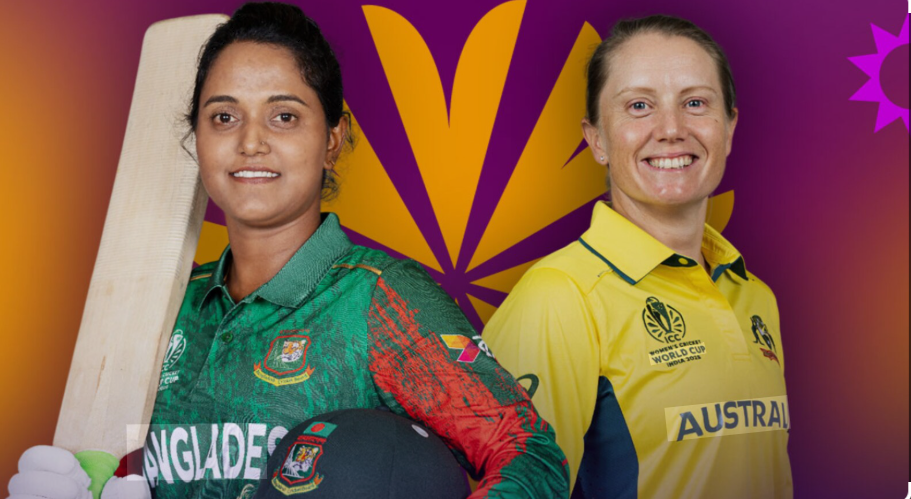
Bangladesh Women Vs Australia Women’s National Cricket Team Timeline
07 mins
Table of Contents
The timeline between these two women’s cricket teams reflects a journey shaped by contrast, learning, and gradual evolution. One side entered the international stage with a well established system, deep experience, and a winning mindset built over decades. The other side arrived with developing structures, limited exposure, and a strong desire to compete at the highest level. Early encounters highlighted a clear gap in skill, execution, and match awareness, yet each contest became an important stepping stone for growth. Over time, these meetings have transformed into a narrative of improvement, tactical adjustments, and rising competitiveness, where every match adds a new layer to their evolving cricket story.
Latest Matches Table
Date
Format
Venue
Winner
Margin
First Innings Score
Second Innings Score
16 October 2025
ODI
Visakhapatnam
Australia
10 wickets
Bangladesh 198/9
Australia 202/0
3 April 2024
T20I
Mirpur
Australia
77 runs
Australia 155/6
Bangladesh 78/10
1 April 2024
T20I
Mirpur
Australia
58 runs
Australia 161/8
Bangladesh 103/9
30 March 2024
T20I
Mirpur
Australia
10 wickets
Bangladesh 126/4
Australia 127/0
27 March 2024
ODI
Mirpur
Australia
8 wickets
Bangladesh 89/10
Australia 93/2
24 March 2024
ODI
Mirpur
Australia
6 wickets
Bangladesh 97/10
Australia 98/4
Team Statistics Summary Table
Format
Total Matches
Australia Wins
Bangladesh Wins
Draws or Ties
No Result
Win Percentage Australia
One Day Internationals
4
4
0
0
0
100.00
Twenty20 Internationals
6
6
0
0
0
100.00
Overall Combined
10
10
0
0
0
100.00
Matches in Bangladesh
6
6
0
0
0
100.00
Matches in Australia
1
1
0
0
0
100.00
Neutral Venues
3
3
0
0
0
100.00
Individual Batting Records Table
Player Name
Country
Matches Played
Total Innings
Highest Score
Total Runs
Strike Rate
Beth Mooney
Australia
9
7
81
258
114.66
Alyssa Healy
Australia
9
7
83
215
128.74
Nigar Sultana
Bangladesh
10
10
32
167
78.40
Georgia Wareham
Australia
9
4
57
98
134.24
Ashleigh Gardner
Australia
10
5
32
92
118.51
Fargana Hoque
Bangladesh
8
8
36
88
54.12
Individual Bowling Records Table
Player Name
Country
Matches
Overs Bowled
Total Wickets
Economy Rate
Best Bowling
Ashleigh Gardner
Australia
10
33.2
14
3.82
3 wickets for 22
Sophie Molineux
Australia
6
21.0
11
3.14
3 wickets for 10
Georgia Wareham
Australia
9
24.5
10
4.12
3 wickets for 24
Megan Schutt
Australia
8
26.0
9
3.56
3 wickets for 22
Kim Garth
Australia
5
18.0
7
3.27
2 wickets for 11
Nahida Akter
Bangladesh
9
28.0
5
5.40
2 wickets for 19
Early Encounters and Foundation of the Rivalry
The first phase of meetings between these two sides began in a period when women’s international cricket was still expanding its global structure. One team had already established itself as a dominant force with a highly professional system, strong domestic pipeline, and deep match experience at the international level. The other side was still in a developmental stage, focusing on building core skills, match awareness, and consistency against elite opposition. Early matches clearly showed the gap in experience, especially in handling pace bowling and maintaining partnerships under pressure. Despite one-sided results, these games played a major role in shaping future growth. Players learned how to adapt to higher standards, improve shot selection, and adjust bowling strategies. These early encounters were less about competition and more about exposure, which later became the foundation for a more structured and competitive approach in international women’s cricket.
Match Type
Year Phase
Result Pattern
Key Moment
ODI
Early era
One-sided
Opening pressure spell
T20
Early era
Dominant side win
Powerplay control
ODI
Early era
Comfortable chase
Middle order stability
T20
Early era
Controlled victory
Death overs execution
Australia Dominance in Early Competitive Clashes
In the early competitive phase, one side consistently displayed complete control across all departments of the game. Their batting lineup was technically strong, capable of building long partnerships and accelerating when required. The bowling unit applied constant pressure with disciplined line and length, leaving very little room for error. The opposition often struggled to rotate strike and build momentum, which resulted in frequent batting collapses. Fielding standards also played a crucial role, with sharp catching and quick ground coverage preventing easy runs. These matches often ended with large margins, reflecting the difference in preparation and experience levels. However, even in defeat, the learning curve was significant for the developing side, as they began understanding how elite teams manage pressure situations and maintain consistency throughout an innings.
Match Type
Year Phase
Result Pattern
Key Moment
ODI
Mid era
Dominant win
Top order partnership
T20
Mid era
Strong victory
Early wicket burst
ODI
Mid era
One-sided result
Spin control phase
T20
Mid era
Comfortable win
Fielding dominance
Bangladesh Growth Phase and Tactical Evolution
As international exposure increased, gradual improvements started to appear in performance levels. The developing side began focusing more on structured batting approaches rather than overly aggressive shot selection. Bowlers showed better consistency, especially in maintaining tight lines during middle overs. Fitness levels improved, which helped sustain pressure during long spells in the field. Coaching strategies also became more refined, with emphasis on game awareness and situational decision-making. Although results still heavily favored the stronger team, the margins of defeat became slightly narrower over time. There were also occasional partnerships that showed resistance and bowling spells that created brief pressure phases. This phase marked an important transition from learning experience to more competitive intent at the international level.
Match Type
Year Phase
Result Pattern
Key Moment
ODI
Growth stage
Competitive loss
Improved partnerships
T20
Growth stage
Controlled defeat
Spin resistance
ODI
Growth stage
Reduced margin
Middle overs fight
T20
Growth stage
Structured effort
Better fielding display
Key ODI Clashes and Performance Breakdown
In the one-day format, tactical differences between both teams became more visible. One side focused on building strong starts and maintaining a steady scoring rate through partnerships, while the other relied heavily on spin variations and containment strategies. Matches often depended on how well teams handled the middle overs phase. When the stronger side batted first, they frequently posted challenging totals due to their ability to accelerate in the final overs. The developing side aimed to restrict damage through disciplined bowling and sharp fielding efforts. Individual performances occasionally stood out, especially from bowlers who managed breakthroughs at crucial stages. These ODI matches became important case studies for understanding match tempo, innings construction, and pressure management.
Match Type
Year Phase
Result Pattern
Key Moment
ODI
Various
Strong win
High scoring innings
ODI
Various
Comfortable win
Key bowling spell
ODI
Various
Dominant chase
Partnership control
ODI
Various
Structured victory
Middle overs dominance
T20 Battles and Rising Match Intensity
The shortest format brought greater intensity and faster shifts in momentum. One side relied on aggressive batting depth and quick scoring ability, while the other attempted to counter through disciplined spin bowling and tight field placements. Powerplay overs often shaped the outcome, as early wickets or rapid scoring created immediate pressure. Death overs also played a decisive role, with finishing skills becoming a key factor in final results. Over time, the developing side began showing more intent in chasing targets and building competitive totals. Even though results largely remained one-sided, the intensity of competition gradually increased, making matches more engaging and strategically complex.
Match Type
Year Phase
Result Pattern
Key Moment
T20
Various
Strong win
Powerplay surge
T20
Various
Comfortable finish
Death overs control
T20
Various
Dominant chase
Early wicket pressure
T20
Various
Tactical win
Spin adjustment phase
Star Players Who Defined Encounters
Across multiple encounters, certain players consistently influenced match outcomes through skill and consistency. The stronger side featured batters capable of long, controlled innings and bowlers who maintained pressure from the first over to the last. Their depth allowed flexibility in both batting and bowling combinations. On the other hand, the developing side produced emerging talents who showed resilience, especially in spin bowling and occasional batting resistance. These individual performances added character to the rivalry, turning it into a collection of personal battles within a team framework. Even in losing efforts, standout contributions highlighted potential and long-term development in the squad.
Player Role
Team Type
Strength Area
Match Impact
Batter
Strong side
Consistency
Run building
Bowler
Strong side
Discipline
Early wickets
All-rounder
Emerging side
Balance
Resistance phases
Spinner
Emerging side
Variation
Middle overs control
Modern Era and Competitive Progress
In the modern era, matches have become more structured and competitive in certain phases. While one team continues to maintain overall dominance, the other has significantly improved in handling pressure situations and building partnerships. Batting collapses have reduced, and scoring consistency has improved across formats. Bowling attacks are now more disciplined, especially in maintaining pressure during long spells. Fielding standards have also improved, reducing errors and extra runs. These changes indicate a clear evolution in performance quality and tactical awareness. Although results still favor the stronger side, the competitive gap in specific phases of the game has narrowed, making encounters more balanced in spirit and execution.
Match Type
Year Phase
Result Pattern
Key Moment
ODI
Recent
Competitive loss
Strong resistance
T20
Recent
Narrower margin
Controlled spells
ODI
Recent
Improved fight
Batting stability
T20
Recent
Tactical battle
Death overs pressure
Conclusion
This timeline shows how consistent exposure to elite opposition can shape a team’s identity and long term progress. While one side has maintained dominance through superior depth and execution, the other has steadily improved in skill, discipline, and match temperament. The rivalry is no longer just about results but about development, resilience, and adaptation under pressure. Each encounter reflects lessons learned and progress made in small but meaningful steps. As the modern era continues, the gap is slowly narrowing in certain phases, suggesting a more competitive future ahead where both teams contribute to a stronger and more balanced international women’s cricket landscape.
 1
1 2
2 3
3