 111
111 2
2 3
3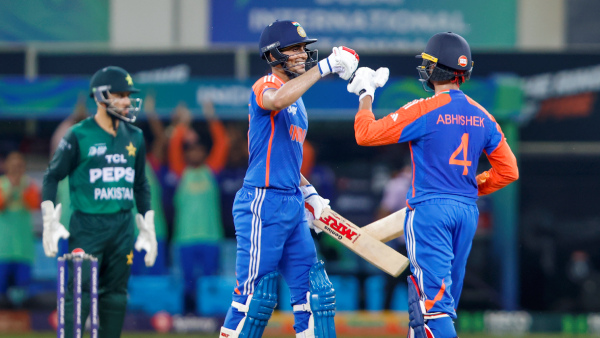
The Pakistan National Cricket Team Vs India National Cricket Team Match Scorecard tells the story of cricket’s greatest rivalry, where every run, wicket, and partnership carries enormous significance. More than just a sporting contest, India and Pakistan matches unite millions of passionate fans while creating unforgettable moments on the field. From thrilling World Cup clashes to dramatic Asia Cup encounters and memorable bilateral series, this rivalry has produced legendary performances, iconic scorecards, and record-breaking achievements. This article explores the complete journey of these historic contests, highlighting the standout players, defining moments, tactical battles, and unforgettable matches that have shaped one of cricket’s most celebrated rivalries.
| Batsman | Dismissal | Runs | Balls | 4s | 6s | SR |
|---|---|---|---|---|---|---|
| Abhishek Sharma | c Azam Khan b Shaheen Afridi | 0 | 4 | 0 | 0 | 0.00 |
| Ishan Kishan (wk) | c Babar Azam b Saim Ayub | 77 | 40 | 6 | 5 | 192.50 |
| Tilak Varma | c Shadab Khan b Saim Ayub | 25 | 24 | 1 | 1 | 104.16 |
| Suryakumar Yadav (c) | c Usman Khan b Saim Ayub | 14 | 12 | 2 | 0 | 116.66 |
| Hardik Pandya | c Fakhar Zaman b Haris Rauf | 5 | 6 | 0 | 0 | 83.33 |
| Shivam Dube | c Shaheen Afridi b Naseem Shah | 27 | 17 | 1 | 2 | 158.82 |
| Rinku Singh | run out (Babar Azam) | 14 | 14 | 1 | 0 | 100.00 |
| Washington Sundar | not out | 6 | 4 | 1 | 0 | 150.00 |
Pakistan Bowling Figures
| Bowler | Overs | Maidens | Runs | Wickets | Economy |
|---|---|---|---|---|---|
| Shaheen Afridi | 4.0 | 0 | 38 | 1 | 9.50 |
| Naseem Shah | 4.0 | 0 | 36 | 1 | 9.00 |
| Haris Rauf | 4.0 | 0 | 38 | 1 | 9.50 |
| Saim Ayub | 4.0 | 0 | 25 | 3 | 6.25 |
| Shadab Khan | 4.0 | 0 | 35 | 0 | 8.75 |
Fall of Wickets
| Batsman | Dismissal | Runs | Balls | 4s | 6s | SR |
|---|---|---|---|---|---|---|
| Saim Ayub | c Sharma b Bumrah | 1 | 3 | 0 | 0 | 33.33 |
| Babar Azam | c Kishan b Arshdeep Singh | 4 | 7 | 0 | 0 | 57.14 |
| Mohammad Rizwan | b Pandya | 8 | 10 | 1 | 0 | 80.00 |
| Usman Khan | c Yadav b Patel | 44 | 34 | 4 | 1 | 129.41 |
| Fakhar Zaman | c Varma b Pandya | 2 | 4 | 0 | 0 | 50.00 |
| Azam Khan (wk) | lbw b Bishnoi | 7 | 10 | 0 | 0 | 70.00 |
| Shadab Khan | c Singh b Sundar | 14 | 15 | 1 | 0 | 93.33 |
| Shaheen Afridi | not out | 23 | 19 | 1 | 2 | 121.05 |
| Naseem Shah | c & b Sundar | 0 | 2 | 0 | 0 | 0.00 |
| Haris Rauf | run out (Bumrah) | 1 | 3 | 0 | 0 | 33.33 |
| Mohammad Ali | b Bumrah | 2 | 2 | 0 | 0 | 0.00 |
India Bowling Figures
| Bowler | Overs | Maidens | Runs | Wickets | Economy |
|---|---|---|---|---|---|
| Jasprit Bumrah | 2.1 | 0 | 17 | 2 | 7.84 |
| Arshdeep Singh | 3.0 | 0 | 21 | 1 | 7.00 |
| Hardik Pandya | 3.0 | 0 | 16 | 2 | 5.33 |
| Ravi Bishnoi | 4.0 | 0 | 22 | 1 | 5.50 |
| Axar Patel | 3.0 | 0 | 19 | 1 | 6.33 |
| Washington Sundar | 3.0 | 0 | 17 | 2 | 5.66 |
Fall of Wickets
| Era / Milestone | Historical Catalyst | Geopolitical Context | Cricket Impact |
|---|---|---|---|
| 1947 Partition | Separation of British India. | Bloodshed, displacement, and territorial disputes over Kashmir. | Former teammates were divided; cricket became an outlet for national identity. |
| 1952 Inaugural Tour | Pakistan’s first official Test tour of India. | Fresh diplomatic relations post-Partition. | Established cricket as a diplomatic tool and a high-stakes arena. |
| The Long Lull (1962–1977) | Bilateral cricket completely suspended. | 1965 and 1971 military wars between both nations. | Rivalry intensified through absence; matches became rare, high-pressure events. |
| Resumption (1978) | Government-backed cricket diplomacy. | General Zia-ul-Haq and Morarji Desai’s efforts to ease political tension. | Cricket used as a soft-power tool to manage cross-border friction. |
| Match / Venue | Key Indian Performers | Key Pakistani Performers | Defining Moment / Scorecard Impact | Result |
|---|---|---|---|---|
| 1952 Test (Delhi) | Lala Amarnath: 4/40 & 4/92. Vinoo Mankad: 8/52 & 5/79. | Hanif Mohammad: 51 & 1. Fazal Mahmood: 2/35 & 2/92. | India bowled Pakistan out for 150 & 152 to win their historic first meeting. | India won by an innings & 46 runs |
| 1952 Test (Lucknow) | Lala Amarnath: 61 & 11. Vinoo Mankad: 4/44. | Fazal Mahmood: 5/52 & 7/42. Nazar Mohammad: 124*. | Pakistan hit back instantly on a matting wicket, bowling India out for 106 & 182. | Pakistan won by 8 wickets |
| 1954 Test (Lahore) | Pankaj Roy: 100. Subhash Gupte: 5/133. | Maqsood Ahmed: 99. Khan Mohammad: 4/79. | First match on Pakistani soil; defensive tactics set a trend of tactical draws. | Match Drawn |
| Decade | Defining Narrative | Political Backdrop | Iconic Match Backdrop |
|---|---|---|---|
| 1970s | The Revival | Simla Agreement & normalization of bilateral travel. | India’s 1978 tour of Pakistan; the first broadcasted matches on television. |
| 1980s | Sharjah Heartbreaks | Cold War tensions and proxy conflicts. | Javed Miandad’s last-ball six in 1986, creating a deep psychological edge for Pakistan. |
| 1990s | World Cup Dominance | Insurgency in Kashmir; extreme border hostility. | High-security clashes at neutral venues like Bangalore (1996) and Manchester (1999). |
| 2000s | Friendship Series & Terror | 2004 peace initiatives followed by the 2008 Mumbai attacks. | Historic tours of 2004 and 2006, leading to a freeze on bilateral tours after 2008. |
| Match / Tournament | Iconic Innings / Bowling Spell | Legendary Statistic | Historical Significance |
|---|---|---|---|
| 1986 Austral-Asia Cup (Sharjah) | Javed Miandad: 116* off 114 balls. Chetan Sharma: 3/51. | Pakistan needed 4 runs off the final ball; Miandad hit a six. | Shifted the psychological balance of power toward Pakistan for over a decade. |
| 1996 World Cup (Bangalore) | Navjot Sidhu: 93 (115). Ajay Jadeja: 45 (25). Venkatesh Prasad: 3/45. | Jadeja hit 40 runs off Waqar Younis’ final two overs. | The Prasad-Sohail Aamer standoff became the ultimate symbol of on-field aggression. |
| 1999 Test (Delhi) | Anil Kumble: 10/74 in 26.3 overs. | Second bowler in Test history to take all 10 wickets in an innings. | Saved the Test series for India under immense political and stadium pressure. |
| 2003 World Cup (Centurion) | Sachin Tendulkar: 98 (75). Saeed Anwar: 101 (126). | Tendulkar hit Shoaib Akhtar for a famous upper-cut six over third man. | Cemented Tendulkar’s legacy in World Cups and broke Pakistan’s psychological edge. |
| Key Player Rivalry | Aggression Catalyst | Famous Flashpoint | Fan / Stadium Impact |
|---|---|---|---|
| Kiran More vs Javed Miandad (1992) | Constant excessive appealing by More. | Miandad mockingly leaped up and down like a frog to imitate More. | Became one of the most replayed comic yet tense moments in cricket history. |
| Venkatesh Prasad vs Aamer Sohail (1996) | Sohail hit a boundary and pointed at the fence, telling Prasad to fetch it. | Prasad clean-bowled Sohail next ball and aggressively pointed him to the pavilion. | Sent the Bangalore crowd into a frenzy; turned the momentum of the World Cup quarter-final. |
| Gautam Gambhir vs Shahid Afridi (2007) | Mid-pitch physical collision while running singles. | Verbal altercation that required the umpire’s physical intervention. | Intensified the post-match talk shows and fan debates across both borders. |
| Sachin Tendulkar vs Shoaib Akhtar (1999–2003) | Battle of ultimate skill vs extreme raw pace. | Akhtar bowling Tendulkar for a golden duck in front of a silent 100,000-strong Eden Gardens. | Fans rioted in Kolkata (1999), forcing the stadium to be evacuated to finish the match. |
| Match Context | Strategic Intent / Plan | Tactical Execution | Outcome / Turning Point |
|---|---|---|---|
| 1987 Bangalore Test | Exploit a treacherous, spinning pitch. | Pakistan selected left-arm spinner Iqbal Qasim and off-spinner Tauseef Ahmed over pacers. | India collapsed for 204 chasing 221 despite Gavaskar’s masterful 96. Pakistan won the series. |
| 2007 T20 World Cup Final | Handle high-pressure death overs. | MS Dhoni gave the final over to the inexperienced medium-pacer Joginder Sharma. | Misbah-ul-Haq played an engineered scoop shot straight to fine leg, sealing India’s title. |
| 2011 World Cup Semi-Final | Build scoreboard pressure in a knockout. | India chose to bat first, setting a target of 260 while choking Pakistan with 5 fielders inside the ring. | Pakistan mismanaged their run chase against India’s disciplined left-arm seamers and spin mix. |
| Tournament / Match | Record Broken / Milestone | Key Game-Changer | Legacy of the Encounter |
|---|---|---|---|
| 2017 Champions Trophy Final | Highest winning margin in an ICC Champions Trophy final (180 runs). | Fakhar Zaman: 114 (106). Mohammad Amir: 3/16 (removed Rohit, Dhawan, Kohli). | Pakistan’s greatest limited-overs comeback victory against India in ICC history. |
| 2021 T20 World Cup (Dubai) | Pakistan’s first-ever 10-wicket victory over India in any World Cup match. | Shaheen Afridi: 3/31 (spell to Rohit and Rahul). Babar Azam / Rizwan: Unbeaten 152-run opening stand. | Broke India’s decades-long undefeated streak against Pakistan in ICC World Cups. |
| 2022 T20 World Cup (Melbourne) | Highest-attended India-Pakistan fixture outside Asia (90,293 fans). | Virat Kohli: 82* (53 balls, featuring back-to-back sixes off Haris Rauf). | Hailed as one of the greatest T20 international run-chases in cricket history. |
| 2026 T20 World Cup (Colombo) | Lowest T20 World Cup total for Pakistan against India (114 all out). | Ishan Kishan: 77 (40 balls). Hardik Pandya: 2/16 (3 overs). | re-established India’s complete tournament dominance with a massive 61-run victory. |
| Structural Impact | Cricket Consequence | Fan / Broadcast Consequence | Future Rivalry Trajectory |
|---|---|---|---|
| No Bilateral Tours | Matches only happen at neutral multi-nation events (ICC/Asia Cup). | Every game carries immense context, as opportunities to play are rare. | Higher stakes per game, leaving no room for a relaxed or experimental team lineup. |
| The “Kohli vs Babar” Era | The historical player battles have transitioned into a direct statistical comparison. | Media and fans treat every run, century, and average as a proxy war for batting supremacy. | Keeps the rivalry alive through individual player benchmarks even during long gaps. |
| Commercial Super-Event | India-Pakistan matches dictate tournament schedules and broadcasting rights pricing. | Broadcasters structure entire groups around guaranteeing at least one IND-PAK match. | The match remains the financial engine of global cricket, funding international schedules. |
The Pakistan Women versus South Africa Women rivalry continues to grow with every series and ICC tournament. South Africa’s experience, powerful batting lineup, and disciplined pace attack have delivered many memorable victories, while Pakistan’s fighting spirit and improving consistency have produced several impressive performances. Beyond the results, this rivalry reflects the rapid development of women’s cricket in both nations. As young talent emerges and both teams continue to compete on the international stage, future contests promise even more excitement. Fans can expect this rivalry to produce fresh records, dramatic finishes, and unforgettable performances in the years ahead.
1. Which team has the better head to head record between Pakistan Women and South Africa Women?
South Africa Women have historically held the advantage in both ODI and T20I matches against Pakistan Women.
2. Which players have scored the most runs in this rivalry?
Several leading batters from both teams have contributed consistently, with South African top order players generally leading the run scoring charts across formats.
3. What is the highest team total in Pakistan Women vs South Africa Women matches?
The highest team total depends on the format and series, with South Africa Women recording several 300 plus totals in ODI cricket.
4. Have Pakistan Women defeated South Africa Women in international cricket?
Yes. Pakistan Women have registered memorable victories over South Africa Women in both ODI and T20I cricket, although South Africa have won the majority of meetings.
5. Why is the Pakistan Women vs South Africa Women rivalry important?
The rivalry showcases the growth of women’s cricket in both countries, featuring competitive matches, talented players, and significant ICC tournament encounters that continue to strengthen the global women’s game.